9.21.2006

T-10


10. an ode to the movies made in my favorite texas city. the one i'm most proud of? toss up between the chainsaw massacre and varsity blues...that's what i call texas culture.

9. the best music to movie crossover...oh wait this is never a good idea

8. best tv to movie crossover . or the most tragic one depending on whether you loved her television work?

7. all jane austen adaptations cause the only thing better then reading austen is watching austen. how many authors can you say that about?

6. 1/2 of wes anderson's work (the first half in case you're wondering)

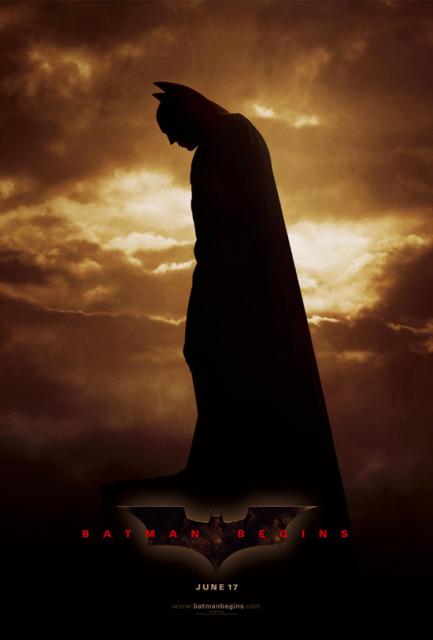
5. batman begins ( i think this blog is actually a poorly concealed ode to that movie)

4. every critic that's ever written something amazing. lane, thomson, scott, dargis, turan, chocano, and zacarek.

3. bars that play movies on a giant screen.

2. anyone i've ever talked movies with.

1. 25 years of life - 7 (years when i wasn't watching movies due to time devoted to developing brain--i.e. reading, writing, hand-eye coordination, etc. and living in a country w/ access to only french and arabic stuff) = 19 years of movies. best.years.ever.

9.19.2006

....and counting

19. the 400 blows/my obsession with French new wave (which only lasted as far as Truffaut). this was a seriously great simple movie, which even my dad who has no patience (a.k.a. falls asleep in movies at a rate faster then even me) liked.

18. my own brief attempt at movie making, in which i learned no editing equipment/knowledge of editing means no movie will be made.

17. during a particularly dry fund summer i (and others who will remain nameless) was desperate for the movies and tried to swing the kid ticket, which really should've worked given how young i'm often mistaken for being. it didn't work and yes we were ashamed.

16. the metacritic stinker alert--this list is pretty revolting

15. discovering that jlo and mm are perfectly suited for a romantic comedy together...they have never made anything as good as this and they never will....

14. trailers (i defer to apple on this)

13. a movie so bad i actually walked out of the theater--gattaca. also, you have to love something that can provoke that serious a reaction out of you.

12. my own special day of torture as an extra in a movie...i was promised a SAG card, i swear.

11. SXSW the hippest festival for movies cause they're not front and center.

10 more to go...

9.17.2006

To the quarter life....

Since my mind has turned to the number 25 this week I've decided to devote this week to 25 reasons that movies have thrilled this 25 year old's heart. Also, let's see how many times I can throw 25 into every post...maybe all the repeitition will help my weak memory realize that I'm getting older.

25. Netflix--cause what's better for a lazy person then getting movies delivered to your door?

24. Quoting lines--yep, it's social insiderism at its worse. people quoting without reference and expecting a reaction (often the next line in the movie, but sometimes a laugh will suffice) because they get cultural moments. guilty.

23. snickering my way through Titanic, and my first realization that Hollywood romances are weak. sidebar--whose genius idea was it to get James Cameron to direct one? i don't remember many tender moments from T1.

22. seeing the English Patient at 15, and being firmly convinced that not only was this a clear sign of my sophisticated taste as none of my friends had seen it, but also getting the thrill of sneaking into an R rated movie.

21. the failed triple feature...one night...three movies...two of them were bad and sustenance was low by the third one. this one's really a testament to my friend A and I who were intrepid enough to try, though failing and literally falling asleep on different rows by midnight.

20. going to MGM studios when i was 13 and learning that they made fire with sheets and fans--way too much for my formative mind to handle.


okay, i'm running out of time today but more to come.

9.14.2006

A movie about my life...in three parts.

So, maybe it would start with this old gem...then progress onwards to my current state best summed up by this with an even more current dose of this brilliant obsession, and finally end on this charming note.

Yes, that's right...if you follow this thread of logic I somehow made the transition from young innocent child to dissolusioned homeless twenty-something with a leg injury that involves self-medication and denial, and all of this will end with animal entrails flying all over the place as I attempt to preserve sanity.

Proof that art mimics life?

8.25.2006

My Dark Knight in shining armour


The following is a review Rekha and I wrote for the class. No, Batman Begins isn't a new film. No, this isn't a new review. Why post it? Because we can, and because we love it. The movie. The review. We love them both. And you should to. Here's why:


What is the difference between a man driven by justice and a man driven by revenge? Writer/director Christopher Nolan attempts to answer this question in his resurrection of the Batman franchise. Batman Begins does just what it says — it traces the birth of Batman out of the broken spirit of a young, parentless Bruce Wayne. Unlike the previous incarnations variously portrayed by Michael Keaton, Val Kilmer, and George Clooney, Christian’s Bale’s Batman is a profoundly realistic character.
Freed from the camp that has been the creative ethos of nearly every portrayal of the caped crusader, Nolan instead embraces the darker, more human side to Batman. What is particularly innovative about his approach is that we get a back-story for Bruce Wayne that does not feel at all contrived. The film begins with a series of flashbacks to Wayne’s youth, juxtaposing the horrifying murders of his parents with the anchorless and vengeful young man he has become.
At a mountain retreat in the Himalayas Wayne encounters Ra’s Al Ghuhl (Ken Watanabe) and the League of Shadows, a group devoted to the erradication of crime through vengeance. As he immerses Bruce in martial arts training, mentor Henri Ducard (Liam Neeson) presses Bruce to relive his worst fears in order “to become more than a man, to become a legend”. And in this fashion Nolan’s storytelling establishes Batman’s physical acumen even as Bruce Wayne learns to harness his fear and convert it in to something more productive.
Upon returning to Gotham, Nolan reveals the nuts and bolts behind Batman’s accoutrement with the help of beloved butler Alfred (Michael Caine) and Wayne Enterprises’ Applied Science guru Lucius Fox (Morgan Freeman), including the Batcave, the Batmobile, and the Batsuit. What follows is a web of crimes, masterminded by Gotham’s resident thug Carmine Falconi (Tom Wilkinson) culminating in a face off between justice and vengeance. Struggling to listen to his own better angels, Bruce attempts to right the system that produces the desperation that led to the murder of his parents. Forsaking the easy relief of revenge on Falconi, Batman maintains hope that the restoration of justice can redeem Gotham. Aiding his struggle are Police Officer Gordon (Gary Oldman) and lawyer and childhood friend Rachel Dawes (Katie Holmes).
Visually, this film departs from Tim Burton’s inaugural vision of Gotham as merely opaque, a comic book enviornoment that is both two dimensional and heavily framed. Nolan’s departure, while remaining dark, allows characters and locations the depth to resonate as actual people and spaces — instead of convenient fictions. For example, rather than a non-descript black hole, the Batcave is a cave, replete with dripping stalagtites and swarms of furry bats. This visual trick allows us to see the man of Batman and the world he inhabits beyond the legend we are so familiar with.
Nothing feels more innovative about this film than the choice to cast Christian Bale in the lead dual roles of Bruce Wayne and Batman, two entirely distinct physical presences. Bale’s face is all sharp angles and smooth planes, giving him the dignified appearance of the aristocrat Bruce Wayne was born to be (also on perfect display in the role of Patrick Bateman in American Psycho). But when his jaw juts outward and his cheeks furrow in, Bale transcends the physical limits of the suit to become the seething, revenge-bound man in black. Michael Keaton, as the original Batman, was an equally unconventional choice to play the leading man, but where he relied on costumes and brooding, Bale embodies the torturous psychology of both Wayne and Batman.
Few superhero movies and comic adaptations achieve the transcendent awesomeness that Batman Begins appears to do so effortlessly. It’s rare the film that is able to marry franchise filmmaking with the kind of directorial weight Nolan brings, particularly in the genre of noir, where he is clearly at his best. The wide appeal of Batman Begins is not to be underestimated—fans of Nolan’s earlier Memento will appreciate the film’s commitment to narrative and character while comic book fans will appreciate seeing a favorite hero reclaimed from camp. But perhaps most appealingly, Batman Begins taps into an American ideal that we all have the potential to be our best selves with a little introspection and a lot of money.
8.22.2006

When viewing pleasure matters.

I got to wondering recently about where I do my movie watching, and how much of a difference it makes to a movie watcher when the theater aesthetics are pleasing. So, I'm attempting a statistical breakdown here (and since my math skills are weak and i didn't actually attempt to tally numbers) it's more of an estimate.

In the last 5 years when I believe my movie watching skills have been honed and I'm proud to say diversified this is what my location breakdown looks like:

  • Corporate Theaters (i.e. Cinemark, AMC, etc.) 45% Most of these experiences have been good although some have better stadium seating then others, and most often have been over-air conditioned. However, despite that I probably experience my greatest rates of falling asleep in a movie in these conditions. Most recently, Superman and Miami Vice have fallen into this trap. Greatest advantage here is the double feature, which I haven't done in a while but it is one of life's greatest pleasures.
  • Semi-Corporate Indie Theaters (i.e. Landmark, Greenway, and the Alamo Draft House) 12% Okay, these have usually been very good experiences in terms of the actual movie, but these venues suffer from half assed corporate ownership thus no stadium seating and often too hot or cold depending on season although in Houston I would say it's always hot outside and too cold inside. The falling asleep rate here is good...it rarely happens as I often initiate these outings, and thus feel obligated to committ to the movie.
  • Full on independent theaters (only two that I've ever been to--both in Northampton) 5% These have been very positive experiences both in content and quality of viewing, which is interesting given the lack of resources devoted to viewing pleasure (definitely no stadium seating, or air flow of any kind here). But, these places have charm and that counts for a lot. Plus, while I've encountered a few obnoxious audience members nothing too bad, and nothing compared to the crowds you get at option #1.
  • And finally--the home viewing experience, which I give an A+ despite some potential pitfalls. 27% So, there are obvious reasons that home is good...the snacks are better and cheaper, I can talk whenever I want and not feel bad about it, and of course the pause button is essential here. Also, the whole falling asleep thing is not as much of an issue nor is it as socially awkward if it happens (and by socially awkward i mean when you hit the deep rem sleep and deep breathing, sounds, etc. follow). Just for the record I rarely hit that stage of sleep in a movie, but it has happened.

As far as rating my favorite experience in all of these settings I'm not sure I can although I find option #1 is best suited for movies full of fluff or action. So for example, Batman Begins is as good as The Princess Diaries to me thanks to the giant theater. Option #2 is best suited for more serious movies that you're willing to drive a little farther for, and if ambience is a factor. So, for example I owe my love for Life Is Beautiful entirely to the River Oaks Landmark theater. As for option #3 it encompasses my most recent experiences of which there have been many, but I think seeing Head On at the Academy of Music was pretty awesome even if it was with a bunch of crazy German Studies academics. Option #4 really has too many memories to recount so, I won't, and instead I'll just say that I love all the places that I've seen movies in, and in the vein of my new statistically savvy self they've all made my life at least 80% better.

8.11.2006

Making a political movie without politics (here's looking at you Oliver Stone)


Although I haven't actually seen World Trade Center I have read the reviews, which as far as I'm concerned is good enough. The glowing reviews are disappointing, but no less then what I exepcted from a public that is still not prepared to think about September 11th outside of the context of patriotism. But, as much as I don't like Oliver Stone, and never had high expectations for this I'm disappointed with amount of sapiness that that this movie just ooooooozes. I mean the guy is in now way subtle, as was proven by the uber bombastic Wall Street, but if you have a huge production budget and a major studio behind you, and you get to be one of the first to make a movie about an event that is both incomprehensible, and stained in our memories you better do better then this cheese fest. I think it's irresponsible filmmaking , or just a wasted opportnity depending on how much you value film culture.

It did remind me though of a great movie I saw this year that does deal with political issues in a heavy complicated way--Cache by Michael Haneke. I think the movie was more of an intellectual exercise then an interesting narrative, but I think it was incredibly powerful in how it handled national issues by bringing them into private domestic space. I also think the surveillance stuff was really creepy, and got right at the immigrant space in France in a way that was innovative. Of course the real difference between these two (Stone and Haneke) is that one understands nuance, but I also think that one is more honest and more interested in dissecting people, which ultimately is a much more satisfying experience for the viewer. Because really--what's the point in making a political movie if you're going to make it devoid of politics?

7.18.2006

Being a critic means never having to say I'm sorry...

There's a great article I came across in the NYT this morning written by A.O. Scott on the role of the film critic, and how to think about movies as vehicles of both art and commerce. I think it's one of the most fascinating divides in popular culture because movies are a medium that have become so accessible. With a combination of options from digital television, illegal and legal downloading, and just the overall increase of new products flooding new markets the demographic is changing. Where I think this gets really interesting is how it influences audiences comprised of people like me who are about equally engaged in reviews and movies.

"So we’re damned if we don’t. And sometimes, also, if we do. When our breathless praise garlands advertisements for movies the public greets with a shrug, we look like suckers or shills. But these accusations would stick only if the job of the critic were to reflect, predict or influence the public taste.
That, however, is the job of the Hollywood studios, in particular of their marketing and publicity departments, and it is the professional duty of critics to be out of touch with — to be independent of — their concerns. These companies spend tens of millions of dollars to persuade you that the opening of a movie is a public event, a cultural experience you will want to be part of. The campaign of persuasion starts weeks or months — or, in the case of multisequel cash cows, years — before the tickets go on sale, with the goal of making their purchase a foregone conclusion by the time the first reviews appear. Sometimes it works and sometimes it doesn’t, but the judgment of critics almost never makes the difference between failure and success... "

I think to an audience like us the cultural experience of the film is embedded into the discourse surrounding the film (i.e. who made it, their aesthetic choices, studio intrigue, etc.) I don't think films exist in that kind of vacuum anymore, and the proof is in websites like metacritic.com and rottentomatoes.com, both good at providing numerical breakdowns of judgment, and both popular with audiences who like going to the movies, but who claim not to be concerned with judgment.

"So why review them? Why not let the market do its work, let the audience have its fun and occupy ourselves with the arcana — the art — we critics ostensibly prefer? The obvious answer is that art, or at least the kind of pleasure, wonder and surprise we associate with art, often pops out of commerce, and we want to be around to celebrate when it does and to complain when it doesn’t. But the deeper answer is that our love of movies is sometimes expressed as a mistrust of the people who make and sell them, and even of the people who see them. We take entertainment very seriously, which is to say that we don’t go to the movies for fun. Or for money. We do it for you."

I guess the final point to make here is that critics exist where culture mattters, and even as that notion evolves, and the division between high and low brow is maintained I still like thinking that there are people out there doing the heavy lifting.

6.26.2006

"Ask a black dude" + "I'm going to piss on you"= Chappelle's Show

So, I just spent the afternoon watching 8 episodes of Chappelle's Show (which is actually not that much since every episode is about 17 minutes) back to back, and I'm into it. But, I can't help wondering what exactly he's doing with humor--what he's getting away with in terms of race politics and what he's overtly critiquing ? I should say right off the bat that on a more superficial level I really like his style. I like the way he talks (some southern/midwestern combo drawl), I like his slightly preppy outfits, and I like the way he delivers his monologue cause there's always a great punchline and he doesn't do that obnoxious overt pause before he gives it to you.
So, back to why this show is smart. I think in one of the very first episodes he sort of throws out there how racist the world we live in is...and he goes on to make some really silly examples, but in this effortless way he has made something really murky very clear. I definitely attribute some of that to the power of comedy and it's way of getting at truth, but I give way more credit to Chappelle for making it the center of his show. I've also read a couple of things recently including a piece in Esquire about why he left the show. I imagine creative control, particulalry in a show designed around your own humor (which seems to me to be a lot of personal neuroses) would be hard to cede. Harder if you're ceding to a board of white men who know your demographic for their advertising revenue potential and little else. After reading the interview I'm more impressed with him for leaving, and for not willing to do a show with his name (read brand) but not his full control.

My favorite recurring sketch on the show is "Ask the Black Dude" mostly cause I think the guy answering the questions is playing it straight and saying the sort of in your face truth that's hard to hear. I also think the question of who's being the isolater/isolated when you feel compelled to ask these questions to someone "different" is tough. I mean I guess if you think you have the right to ask those questions your assume some inherent power, and of course you assume that you are the norm. I guess that's what makes these segments so clever...Chappelle's got a handle on the seduction of power.

ohhhhhh....snap

5.21.2006

Dear two cents students,


You probably don't read this blog anymore since our class is over, although I think you all secretly loved it. But, after looking at all of your cool final projects and having people check them out at the Writing Festival I just wanted to say good work! There was a really diverse range of interests and styles present in your writing. I'll leave you with cover of the movie I'm most looking forward to this summer...yeah, that's right it's going to be awesome.

p.s. kudos to the anal probes...you guys killed it in movie trivia, and proved what mental giants you truly are.
p.p.s. Also, if by chance any of you do end up becoming critics don't forget who helped you get there.

5.15.2006

It's up. It's rad. You love it.

Here's the class magazine highlighting all your wonderful work this semester. You all should be very proud--there's some very quality stuff here. Browse online by clicking on the thumbnails for a larger image, and we'll have hard copies available at the Celebration of Writing in Goodell on Thursday.

5.12.2006

It's the one that says Bad M@therf$%&er.


I know where I'll be August 18. Do you?

5.09.2006

In case you missed it...


...and many of you did. Today's attendance in class, was, shall we say, lackluster. So let me take this opportunity to give a shout out to those who kept Rekha and I company between the hours of 4 and 6. Mary, Shana, Matt, Stuart, Simon, and Tyler--props to you, yo. Sarah and Dan, partial credit will be awarded.

For those of you who missed class--some of you notified us of your absence, some of you didn't. But all of you missed dancing polar bears. Dancing polar bears. You can't even find that kind of thing in a David Blaine special. It's really a bummer for you. You'll have to live with disappointment.

In all seriousness, missing class is a problem. That's why showing up and getting your butts in the seats is one of the primary determinants in whether or not you pass this class. But you knew that...

Next week's class, while lacking polar bears, will be MANDATORY if you'd like to pass the class. Since final projects are due (along with any and all late assignments), you must show up to turn in your project. Bloggers, this applies to you too, even though you won't be physically turning in any work.

Keep blogging and posting, and we'll see you next time.

5.08.2006

Going digital...

I know we haven't really talked about this in class yet, but I'm really interested in the move to go to digital by filmmakers, particularly those who are recent converts. I'm thinking of this in the context of Lynch whose new film Inland Empire is apparently shot completely in DV, and is causing quite a raging debate on the web. I also read about a panel at the Tribeca Film Festival headed by Steven Soderbergh this past week that dealt with this topic. I definitely understand the economic/distribution advantages of going digital, and I'm not even one of those people who claim the quality of digital is always shabbier. But, insofar as film is a visual medium and one that depends on a visual aesthetic what does a shift motivated more by economics then by visual appeal? I know that Soderbergh at least has talked about DV entirely in the context of releasing films through different mediums, which to me is a different question then what it does for the aesthetic of film. So, is it a good thing? A sad thing? Will it change how we literally view film?

4.26.2006

"There's Fish for Everything"

Since technical difficulties prevented us from entering the world of David Lynch yesterday, here's a little something to get us started. He's an odd duck, that Lynch, but he's an idea man. Oh yes, an idea man.


Thoughts?

Gandhi & Scarface, together at last

As Rekha and I mentioned, Pleasant Street Theater in Northampton will be showing 33 films in 31 days, beginning May 1. There are some movies definitely worth seeing. An odd mix...The Deer Hunter and Amelie? Brazil and Whale Rider? And don't forget Eternal Sunshine of the Spotless Mind on May 30. Yes, Mary, I'm talking to you.

4.19.2006

When bad things happen to bad people....

So, if just watching American Psycho wasn't enough to blow your mind I've been reading random interviews/articles about the movie that I think y'all might find interesting. If you check out the salon index for Mary Harron (the director) you will come across a bunch of great stuff. For example, Leonardo DiCaprio was originally slated to play Patrick Bateman and it had (shockingly) a very hard time finding a studio to distribute it. One thing that I really struggle with when it comes to this movie is how to think about a female behind the camera telling a story adapted from such a controversial masculine novel.

In an piece in Salon by Jessica Hundley --
"In "American Psycho," Harron directs a delicately boned, elegantly dressed Christian Bale as Bret Easton Ellis' coldhearted killer. Bale plays the part with bored and haughty bemusement, moving through the film like a smugly satisfied cat. "American Psycho" is not a film one might expect to be directed by a woman, but it is Harron's feminine touch -- and her humor -- that keeps the film's brutal elements palatable. In a satirical take on '80s excess, Bale's rich kid has a sense of entitlement as large as his ego -- yet there's something in his snobbery that is appealing. We can laugh at his cruelty because Harron has created an effective film stereotype: the privileged white Ivy Leaguer every viewer loves to hate".

I'm not really sure this is a very complete thought on Mary Harron directing the movie--what is this feminine touch? Is it possible for a female director to escape a male aesthetic? I also wonder if the fetishization of Bateman is unique to her eye or just necessary for the adaptation?

And finally--as far as the music in the film goes Sarah Vowell has a really interesting take on it in yet another Salon article.

"Ellis writes deftly about people who shouldn't be doing what they're doing, and one way they live with themselves is by shutting off the silence that is the examined life's requisite. You cannot examine your life too closely if you've got "Walking on Sunshine" full blast on your Walkman, as serial killer Patrick Bateman (played by Christian Bale) does in the new screen adaptation of Ellis' "American Psycho." I always thought good people needed good music to make a good life, but do the bad-to-worse characters of Ellis' imagination need music to drown out the sound of their own consciences?"

So, for those of you who found the music intolerable-- here's your defense.

"The genius of director Mary Harron's film "American Psycho" is the way she juxtaposes Ellis' musical tirades into the action. In the movie, she has Bateman delivering his manifestos he's killing people. Harron's comic timing is impeccable. Now, when Bateman's talking up Huey Lewis and the News he's jabbering that their album "Sports" is "a personal statement about the band itself" as he ax-murders a guy. After he's finished the guy off, Bateman absorbs "Hip 2 Be Square" with blood all over his face; he lights a cigar, and -- something Ellis would probably never let him do -- actually listens to the song. Even though sometimes the reader feels like Ellis is letting Bateman get away with murder, the author punishes his protagonist: He has no peace; and despite the fact that Bateman shall have music wherever he goes, it's Collins' "Sussudio," which strikes me as punishment enough"

I'll end here by swearing that I don't write for Salon, and this is not just one big plug for them, but they do have some pretty great stuff.

4.16.2006

Polar icecaps? O-ver-rat-ed.

So, this may take us a bit far afield, but I was thinking about commercials as art (as Matt suggests), as a business tool, and how they might relate to the discussion we're having about trailers.

There's a new phenomenon of "user-generated content" on the rise. What does this mean? In places like myspace, it means building your pages to look how you want it to. In advertising, it means companies are letting the consumers suggest and dictate what an ad says or how it looks. Pretty smart, actually. It's a theory akin to voting on American Idol and market test research: let the consumers tell you how they want to be sold.

Of course, kids say the darnedest things. The obvious flipside to letting the consumers do the talking is that some of them might say things you don't like. In Chevy's recent campaign for their Tahoe SUV, they allow users to choose various scenes of the Tahoe driving, one of a few soundtracks, and they let users write the titles that come up on the screen. This has led to some fairly interesting commentary and ad-making. Matt, to me, this really is art. Fight the power. And then get the kids to soccer practice.


Oh, and here's another clip worth looking at when considering trailers. It won a contest to recut The Shining into a feel-good family film. How does editing and music make this classic horror into Mr. Mom? That may be the scariest thing of all...

4.14.2006

So, you liked the movie? Wait until you see the trailer!


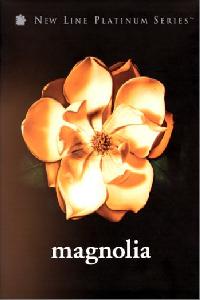
One thing that occured to me as we were watching a clip from Magnolia this week in class is the amazing phenomenon of movie trailers. When done right they can be brilliant, and in my humble opinion infinitely better then the movie they advertise. I know that they aren't always put together by the director, but the reason I bring Magnolia up is because it has one of the best trailers I've ever seen for a movie. In fact, I think it was much better then the movie it advertised, which I recognize is a weird thing to say but here's why. I think the concept behind the movie is clever, and even experimental in some regards but the finished product is muddled, too long, and incomprehensible at points. The trailer on the other hand is a sleek piece of filmmaking (P.T. Anderson actually put the trailer together) with NO voice overs and Aimee Man's brilliant music enhancing what looks like some powerful scenes. It's too bad it doesn't all come together in the movie, but it doesn't mean that the trailer can't stand alone. So, I tried really hard to dig up the trailer, but with no success. Apparently archiving trailers is not at all the thing. Can I say that trailers stand alone as their own brilliant subsection of film? That they make nods to a plotline, give us the best acting and lines of the film, and do it all in 2-3 minutes? That at times they falsely advertise a film to persuade us it's better in clips and cuts then it is in full lenghth? Sure I can cause it's my post!

4.13.2006

I'm a loser, baby.

Today's New York Times featured a piece by Virginia Heffernan that I found fascinating. It was concerned some new DVDs produced by Sesame Street for children under two years old. Oddly enough, some people don't like the idea of 3-month-old babies watching TV. The article is great, but even more interesting to me was the beginning of the article and some philosophizing on the stigma attached to television viewing. Observe:

Self-doubt stymies the television watcher. Go to the symphony, the opera, the theater or the ballet and you're rewarded with a feeling of cultural accomplishment; if you like the production, you feel improved, and if you dislike it, you feel superior. Either way, you've won.

But television is not for winners. Television is for low, exhausted potato people who slouch, and for their children, who are plopped in front of it. Slouchers and ploppers, that's us — and we tend to incur the wrath of more upright types. But, in spite of that generalized scorn and the self-doubt it induces, the loser in all of us plainly can't stop watching television, partly because it affords an opportunity, in our hard-driving world, to waste time and energy flagrantly, to live profligately, to forgo winning. Moreover, great television shows capitalize on this defenseless state, allowing us to grieve, pass imaginatively into unusual mental states, laugh off anxieties, lose ourselves. Television, in fact — to give the experience a paradoxical kind of dignity — encourages us to practice the great art of losing.


I think there's something so on-point about this theory. I praise TV all the live-long day, and yet I'm not just praising it, but justifying my behavior. As Rekha knows, I always say that "reading is my job. I need to watch TV to know I'm not working." But this is a rationalization, isn't it? Do I need to do that? I certainly don't justify my time at the theater, reading books, or browsing art galleries. Not that I actually do those things. I might miss Lost. But if I did do those things, I don't think I'd feel compelled to explain their merits to the world.

This sounds a bit like therapy. But don't worry about me, I'll be fine.